

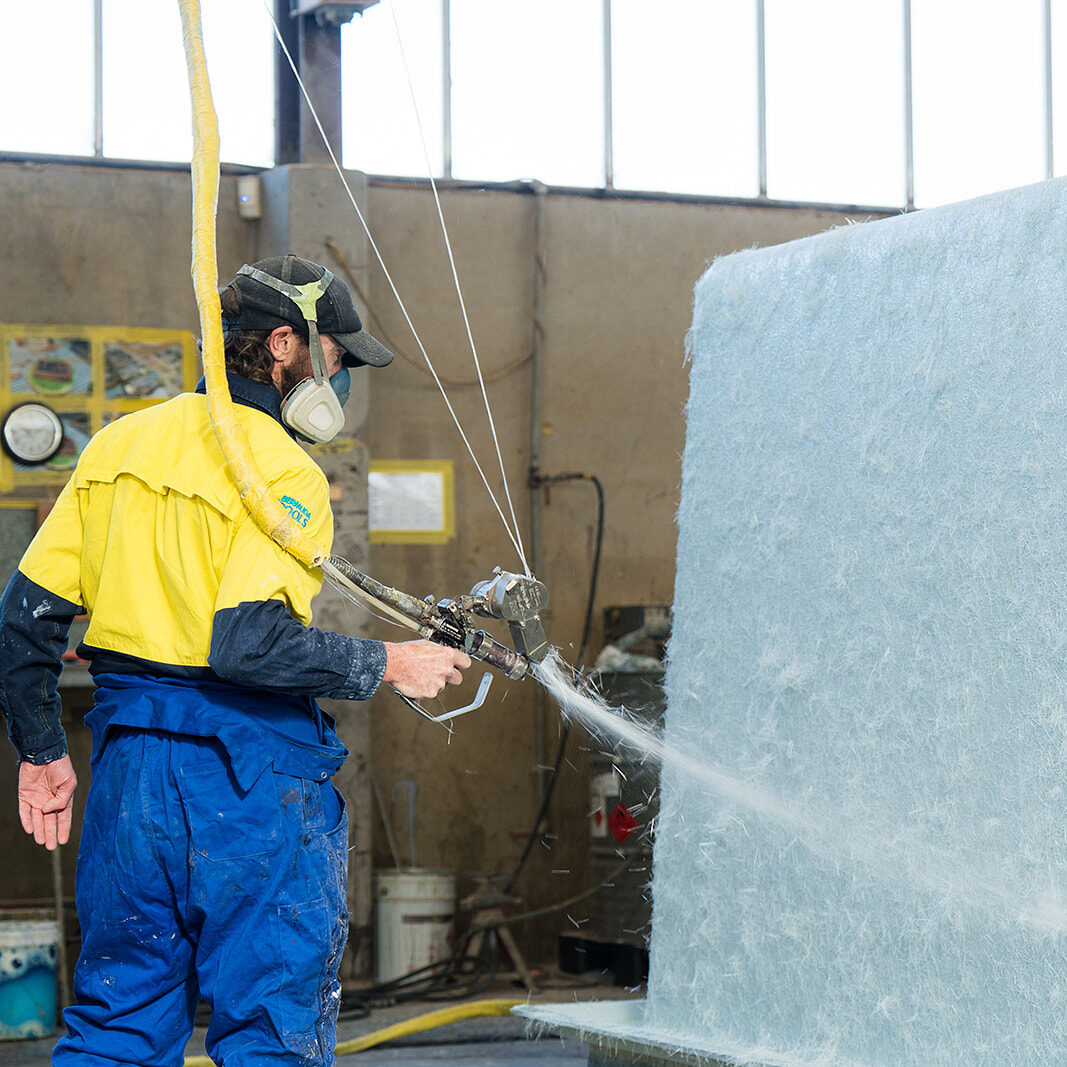
Composite engineering is an innovative and crucial process for modern manufacturing. At its core, it involves the skilled and precise work of combining high-performance materials such as polyester and epoxy resins with sophisticated reinforcements like fibreglass mat and cloth and carbon fibre. This process culminates in a durable, finished product, often protected by a high-quality, customised outer layer known as gelcoat.
The fundamental principle of composite engineering is creating materials that are superior to the sum of their individual components. By embedding strong, reinforcing fibres within a resilient resin matrix, we unlock a new class of materials with unmatched performance characteristics for a wide range of applications, from essential infrastructure to high-performance maritime components.
The Unmatched Advantages of Composites
Products created through composite engineering offer compelling advantages that traditional materials like metal, wood, or concrete simply cannot match.
Strength, Weight, and Durability
The difference is immediate and profound: composite products are designed to be significantly lighter yet far stronger than their traditionally produced counterparts. This strength-to-weight ratio is a massive benefit, particularly in transportation, aerospace, and marine industries, where reduced weight translates directly into fuel efficiency and increased payload capacity.
Furthermore, these materials possess an almost unlimited lifespan. Unlike steel, composites do not rust; unlike wood, they do not rot. They are inherently resistant to moisture, chemicals, and the harsh UV rays typical of the New Zealand environment. This results in minimal maintenance and a lower total cost of ownership over the product’s entire lifecycle.
Seamless Construction and Customisability with Composite Engineering
One of the most valuable benefits is the ability to create seamless components. By laying up and moulding the materials, we eliminate the weak points typically associated with welding, joints, and fasteners. This leads to enhanced structural integrity and a smoother, more aesthetically pleasing finish.
Crucially, the moulding process allows for endless customisation in terms of size, shape, and colour. Whether you require a massive, intricately shaped water tank, a unique architectural panel, or a streamlined boat hull, composites allow designers to break free from the constraints of standard sizing and fabrication methods. The final product is consistently coated with gelcoat, providing a rich, vibrant colour that is fade-resistant and built to withstand the rigours of the Kiwi outdoors.
Material Science: Reinforcements and Performance
To meet the exacting demands of modern projects, various reinforcements can be strategically incorporated into the composite process, tailoring the final product’s performance for a specific function.
- Carbon Fibre: Known for its incredible stiffness and low density, carbon fibre is used when maximum lightness and strength are paramount, such as in competitive sporting goods or critical structural elements.
- Kevlar (Aramid Fibre): This reinforcement is utilised where high impact resistance and energy absorption are required, making it ideal for protective and high-stress applications.
- Aluminium (Core Materials): While sometimes used as a fibre, aluminium often appears as a core material in sandwich constructions to enhance rigidity without adding excessive weight, a common technique in composite panel sandwich construction.
This material selection process means products can be deliberately engineered to withstand specific loads, temperatures, or environmental exposure, resulting in a product that is not just a replacement for a traditional item, but a genuine performance upgrade.
Strength in Design and Innovation
Our commitment to composite engineering is driven by a strong focus on design innovation. We see materials not as fixed constraints, but as variables in an equation where the only limit is our collective imagination.
By combining the flexibility of resin systems with the structural integrity of advanced fibres, we provide endless possibilities for architects, engineers, and manufacturers looking to achieve lighter, stronger, and more durable results. From initial concept development through to the final fabrication, our process is designed to deliver products that are robust, cost-effective, and built to last—a real advantage in the competitive New Zealand market.
The Composite Group has revolutionized component design and production by providing complete solutions in the following sectors: Industrial, Transport, Motor homes, Architectural, Agriculture, Custom Moulding, Construction, Marine Leisure, Signage, Residential and Commercial Swimming pools, Tanks.
Explore the Industries We’ve Helped Elevate with Composite and Fibreglass Products